Certified Ekasi Basic Robotics and Coding Instructor
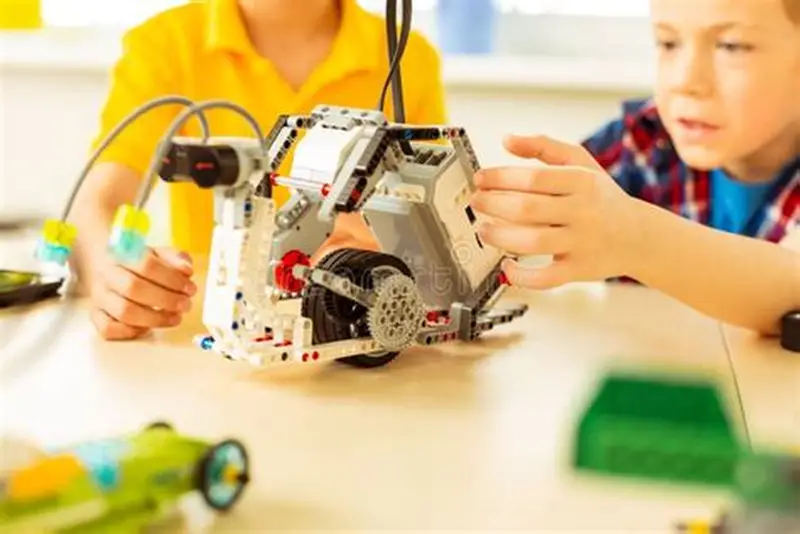
Certified Ekasi Basic Robotics and Coding Instructor
Teaching and Training Advanced

Certified Ekasi Basic Robotics and Coding Instructor

This comprehensive certification program trains individuals to become effective robotics and coding instructors in community settings. Participants learn foundational robotics concepts, basic programming skills, pedagogical techniques, and strategies for teaching in resource-constrained environments. Graduates will be equipped to lead workshops and classes that foster digital literacy, critical thinking, and innovation among young people in townships and underserved communities.

Course Description

This comprehensive certification program trains individuals to become effective robotics and coding instructors in community settings. Participants learn foundational robotics concepts, basic programming skills, pedagogical techniques, and strategies for teaching in resource-constrained environments. Graduates will be equipped to lead workshops and classes that foster digital literacy, critical thinking, and innovation among young people in townships and underserved communities.

Learning Outcomes

Analyze the unique challenges and opportunities for STEM education in township communities.
Identify and describe the function of basic robot components (motors, sensors, microcontrollers).
Write simple programs using Scratch, Blockly/MakeCode, and Python for microcontrollers.
Build functional robots using affordable kits and recycled materials.
Debug common hardware and software issues independently.
Design project-based learning activities that address local interests and needs.
Deliver engaging robotics and coding lessons to young learners.
Manage a classroom of 10-20 students during hands-on activities.
Adapt teaching methods for learners with varying skill levels.
Implement safety protocols for robotics workshops.
Engage community stakeholders to support STEM initiatives.

Target Audience

Aspiring STEM educators and facilitators in community settings.
Youth workers and after-school program coordinators.
Teachers seeking to add robotics and coding to their skills.
Community leaders interested in digital literacy initiatives.
College students and graduates in education, IT, or engineering fields.
Entrepreneurs looking to start robotics training businesses.
Anyone passionate about bringing technology education to underserved communities.

9 Modules
63 Lessons
27h 0m

This foundational module explores the socio-economic context of township communities, the importance of STEM education for creating opportunities, and the unique role of the instructor as a facilitator, mentor, and community connector.
  • 1.1 What is STEM Education? (45 min)
  • 1.2 The Four Pillars of STEM (50 min)
  • 1.3 The STEM Instructor's Role (55 min)
  • 1.4 Benefits of STEM Education for Learners (50 min)
  • 1.5 Overcoming Challenges in STEM Education (60 min)
  • 1.6 The STEM Classroom Environment (55 min)
  • 1.7 Introduction to Project-Based Learning (PBL) (65 min)

This module introduces the core concepts of robotics, including what robots are, their applications, basic mechanical principles, electronic components, and an overview of affordable robotics kits suitable for community settings.
  • 2.1 What is a Robot? (45 min)
  • 2.2 Anatomy of a Robot (55 min)
  • 2.3 How Robots Sense the World (50 min)
  • 2.4 How Robots Move (55 min)
  • 2.5 Robot Control Systems (50 min)
  • 2.6 Introduction to Affordable Robotics Kits (50 min)
  • 2.7 Building Your First Simple Robot (70 min)

This module provides hands-on training in block-based and text-based programming languages used to control robots. Participants learn Scratch, Blockly/MakeCode, and Python basics, with a focus on connecting code to hardware and debugging techniques.
  • 3.1 What is Programming? (45 min)
  • 3.2 Block-Based Coding with Scratch and Blockly (50 min)
  • 3.3 Introduction to Python for Robotics (55 min)
  • 3.4 Arduino C++ for Robotics (60 min)
  • 3.5 Connecting Code to Hardware (50 min)
  • 3.6 Debugging and Troubleshooting (50 min)
  • 3.7 Your First Robot Program: Blink LED (50 min)

This hands-on module guides participants through project-based learning as they design, build, and program functional robots. Projects include line-following robots, obstacle-avoiding robots, and sensor-integrated designs using affordable and recycled materials.
  • 4.1 The Engineering Design Process (50 min)
  • 4.2 Project 1: Line-Following Robot (60 min)
  • 4.3 Project 2: Obstacle-Avoiding Robot (55 min)
  • 4.4 Project 3: Remote-Controlled Robot via Bluetooth (55 min)
  • 4.5 Using Recycled and Affordable Materials (50 min)
  • 4.6 Adding Sensors for Advanced Functionality (55 min)
  • 4.7 Documentation and Presentation of Robotics Projects (50 min)

This module equips participants with essential teaching skills, including lesson planning, facilitation techniques, classroom management strategies, assessment methods, and differentiated instruction for diverse learners.
  • 5.1 Effective Lesson Planning for Robotics (50 min)
  • 5.2 Differentiated Instruction in Robotics (55 min)
  • 5.3 Classroom Management for Hands-On Robotics (50 min)
  • 5.4 Facilitating Collaborative Learning (55 min)
  • 5.5 Formative and Summative Assessment in Robotics (55 min)
  • 5.6 Using Formative Assessment: Exit Tickets and Observations (50 min)
  • 5.7 Building a Growth Mindset Culture (50 min)

This module addresses the practical challenges of teaching robotics and coding in resource-constrained environments, including managing limited resources, offline teaching strategies, community engagement, and safety protocols.
  • 6.1 Teaching Robotics Without Computers (60 min)
  • 6.2 Low-Cost Robotics: Building with Cardboard and Recycled Materials (55 min)
  • 6.3 Free and Open-Source Software for Robotics Education (55 min)
  • 6.4 Maximizing Limited Equipment: Rotation and Group Strategies (55 min)
  • 6.5 Community Engagement and Partnerships (55 min)
  • 6.6 Safety in Low-Resource Robotics Environments (50 min)
  • 6.7 Celebrating Success and Showcasing Student Work (50 min)

This culminating module provides practical teaching experience through micro-teaching sessions and project presentations. Participants demonstrate their ability to deliver lessons, manage a classroom, and showcase their robotics projects.
  • 7.1 Micro-Teaching: Planning Your Demo Lesson (45 min)
  • 7.2 Delivering Your Demo Lesson (50 min)
  • 7.3 Receiving and Giving Constructive Feedback (45 min)
  • 7.4 Reflecting on Your Teaching Practice (45 min)
  • 7.5 Preparing Your Robotics Project Portfolio (50 min)
  • 7.6 Final Project Presentation Preparation (50 min)
  • 7.7 Certification and Next Steps (50 min)

This module equips learners with essential research skills including research design, data collection methods (qualitative and quantitative), data analysis techniques, survey development, interviewing skills, ethical considerations in research, and how to apply research findings to improve teaching practices.
  • 8.1 Introduction to Research in Education (50 min)
  • 8.2 Research Design and Methodology (55 min)
  • 8.3 Data Collection Methods for Robotics Education (55 min)
  • 8.4 Data Analysis for Educational Research (60 min)
  • 8.5 Ethical Considerations in Educational Research (50 min)
  • 8.6 Applying Research to Improve Teaching Practice (55 min)
  • 8.7 Sharing Your Research Findings (50 min)

This module develops critical soft skills essential for workplace success: integrated thinking (connecting ideas across disciplines), logical reasoning and problem-solving, effective verbal and written communication, active listening, emotional intelligence, negotiation techniques, mediation skills, conflict resolution strategies, de-escalation techniques, building consensus, handling difficult conversations, and fostering a collaborative workplace culture.
  • 9.1 Introduction to Integrated Thinking (50 min)
  • 9.2 Logical Reasoning and Problem-Solving (55 min)
  • 9.3 Effective Verbal and Written Communication (55 min)
  • 9.4 Emotional Intelligence for Leaders (55 min)
  • 9.5 Negotiation and Mediation Skills (60 min)
  • 9.6 Building Consensus and Handling Difficult Conversations (55 min)
  • 9.7 Fostering a Collaborative Workplace Culture (55 min)

Certification Exam

Final examination for Certified Ekasi Basic Robotics and Coding Instructor certification

Passing Score: 70%
Time Limit: 60 minutes
Attempts Allowed: 3
Camera Required: Yes

To earn your certificate, you must complete all course materials and pass the final exam with a score of 70% or higher.

Enroll in this Course
Certificate included
180 hours content
Downloadable resources
Mobile access
Duration 180 hours
Skill Level Advanced
Learning Method Self Study
Category Teaching and Training
Modules 9
Total Lessons 63
Last Updated May 2026
Practical skills guarantee